

Americas Markets - Latest Developments
A new analysis by SNL Kagan reveals that the U.S. multichannel market delivered its worst performance on record in the second quarter, losing 216,000 customers compared to a 378,000 gain in the same period last year.
The World Teleport Association (WTA) just published its 2010 update of Sizing the Teleport Market, which provides the only market data on the teleport sector, from number of facilities to revenues, workforce and purchasing power. WTA's Executive Director Robert Bell deconstructs the study and its implications for the industry.
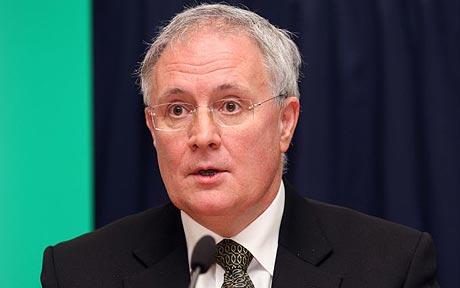 The opening plenary session of the IBC2010 conference will feature an address by Sir Michael Lyons, the chairman of the BBC Trust, on the future of public service broadcasting.
 The CASBAA Convention 2010 to be held at the Grand Hyatt Hotel in Hong Kong on October 25th – 28th will be focusing on digital content delivery. This year’s theme is “Unlock Your Networks” and it aims to connect the dots between Platforms, Channels, Technologies and Partnerships.
NSR’s annual review of the wireless backhaul via satellite market shows the industry made tremendous gains from the blistering pace of wireless subscriber growth in 2009 and the first half of 2010. Despite a challenging economic environment, the wireless industry was one of the global economic bright spots, which led to sustained demand for satellite backhaul services for use primarily in rural markets.
Despite a limited market slowdown, the fixed satellite market reached a new high in revenues last year, according to Euroconsult’s soon-to-be-released report “Satellite Communications & Broadcasting Markets Survey, Forecasts to 2019.” The fixed satellite sector grew both in terms of transponder demand (+5.3%) and revenue reaching $10.3 billion revenue in 2009. The company maintains a positive outlook for the future of the industry.
The GVF's global VSAT Certification Program, which was cited recently in the SSPI's Industry Innovator awards ceremony, is making vital inroads in the maritime satellite space.
In a previous column I noted the GVF VSAT installation training curriculum because it includes a focus on the deployment of systems used in the maritime environment, and would be included in one of the program sessions of the forthcoming GVF Broadband Maritime Europe conference in London on 28th and 29th June (www.uk-emp.co.uk/BMEu.Ldn.2010/).
SpaceX was never going to be a “quiet” company. From its early days in 2002 it has attracted publicity, some good but much of it highly critical both of its objectives and of its ability to achieve them.
Given that SpaceX was founded in 2002 by internet entrepreneur Elon Musk – who at the time had no history in the space business and the two stated objectives of the company were:
The Satellite Industry Association (SIA) released its 2010 State of the Satellite Industry Report, showing an 11 percent growth from 2008 to 2009 in overall world satellite industry revenues. Global revenues for the satellite industry totaled $160.9 billion in 2009, resulting in an average an annual industry growth rate of 11.7 percent from 2004 through 2009.
Over the last few years I have been devoting a not insignificant percentage of my work energies to activities linked to the offshore and maritime sectors – strategically important customers of satellite industry equipment vendors, service providers, and operators. If you are a regular reader of this column, you will know all about the GVF Oil & Gas Communications Europe event that is taking place in Aberdeen, Scotland, as I write; and, about the forthcoming Broadband Maritime Europe 2010 conference that will take place in London, England, 28-29 June.