



Enhancing Connectivity with Value-Added Services
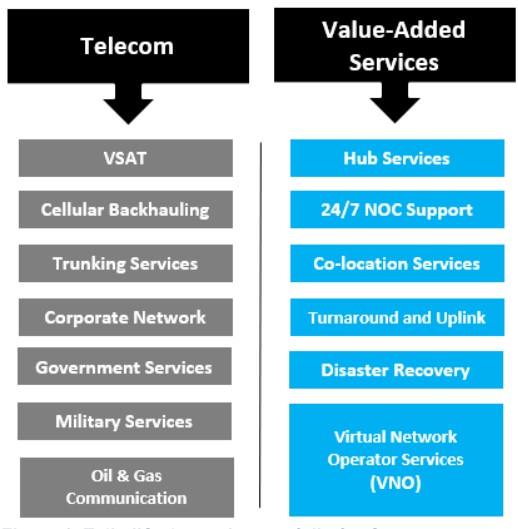
Es’hailSat, Qatar’s national satellite operator, delivers secure, reliable VSAT connectivity tailored for government needs, enabling mission-critical communications, high availability, and robust coverage across even the most remote locations. Es’hailSat’s service portfolio for Government customers comprises of Telecom and Value-Added Services listed in Figure 1.
Figure 1. Es’hailSat’s service portfolio for Government customers comprises of Telecom and Value-Added Services
Overview
A government entity initiated a strategic project to expand its private satellite communication infrastructure, aiming to enhance connectivity across remote onshore and offshore sites, specifically remote islands with no other connectivity options available. The initiative focused on deploying a mobile VSAT (Very Small Aperture Terminal) network to support critical communication services, including video, voice, and data, in areas lacking terrestrial infrastructure. The project leverages Ka-band satellite technology and a centralized hub to ensure secure, resilient, and scalable communication.
Objectives
The primary goal was to establish a robust and secure communication link between a central hub and multiple remote sites—both fixed and mobile. The network needed to support:
- Real-time video surveillance and conferencing
- TETRA radio traffic for secure voice communication
- IP telephony and data applications
- Inter-site communication among mobile units
- High availability and encryption standards
- Rapid deployment and ease of use in field conditions
Technical Architecture
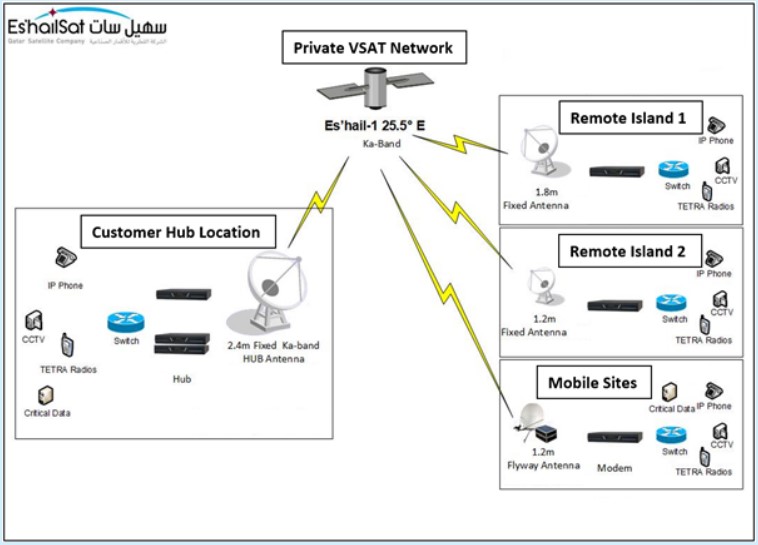
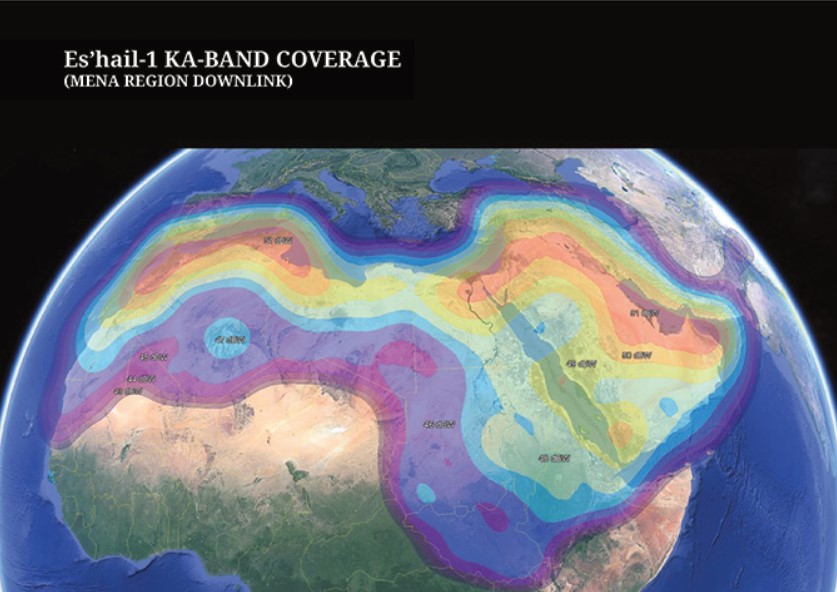
The network architecture follows a point-to-multipoint (STAR) topology, with a centralized hub operated by the end user to securely operate & manage traffic to and from remote terminals. The system operates over the Ka-band, utilizing a regional satellite beam that provides broad coverage across the Middle East and North Africa (MENA) region.
The central hub is equipped with high-power amplifiers and redundant low-noise block converters (LNBs) to ensure uninterrupted service. It integrates a DVB-S2X/TDMA platform capable of supporting multiple mobile terminals simultaneously. The remote terminals include both fixed and mobile units, with mobile sites using lightweight, quick-deploy flyaway antennas.
Deployment Strategy
The project was rolled out in two phases:
- Fixed Site Integration: Two existing fixed sites were upgraded with modern modems and integrated into the new network. These sites serve as stable communication anchors and are equipped with 1.2m and 1.8m antennas.
- Mobile Site Expansion: Six mobile units were introduced, each equipped with 1.2m flyaway antennas. These terminals are designed for rapid deployment and can be operated with minimal technical expertise. Two antenna options were offered: one with automatic satellite acquisition via a mobile app, and another with manual alignment assisted by a smart device.
Each mobile site was able to support a bandwidth of up to 50 Mbps downlink and up to 10 Mbps uplink, sufficient for simultaneous video, voice, and data transmission.
 |
Key Features
- Mobility and Flexibility: The use of flyaway terminals allows for rapid setup and teardown, making the system ideal for emergency response, temporary deployments, or shifting operational needs.
- Security and Reliability: The network employs AES 256-bit encryption and redundant hardware configurations to maintain secure and continuous operations.
- Scalability: The modular design supports future expansion, with options to activate additional mobile sites or increase bandwidth as needed.
- Environmental Resilience: Equipment was housed in protective enclosures to withstand high temperatures and harsh field conditions.
- Self Reliance: Es’hailSat offered comprehensive training to the end-users so they can operate the system on their own.
 |
Impact
The deployment of this private VSAT network significantly improved operational capabilities on remote islands. It enabled real-time coordination, enhances situational awareness through video feeds, and ensures uninterrupted communication for field personnel. The system’s flexibility and ease of use have reduced the logistical burden of deploying communication infrastructure in challenging environments.
Conclusion
This project exemplifies how modern satellite communication solutions can bridge connectivity gaps in remote and mission-critical scenarios. By combining advanced satellite technology with user-friendly deployment tools, the initiative has delivered a resilient, secure, and scalable communication network tailored to the unique needs of remote operations.
 For more information on Es’hailSat’s service offerings go to: www.eshailsat.qa
Es’hailSat will be exhibiting at the IBC 2025 in Amsterdam, the Netherlands from September 12-15, 2025. Visit their stand at:
Hall 1, booth # F.68