


by Henry Hackford
It is widely publicized that the satellite market is seeing a move to smaller satellite design, driven by an increase in commercial and military spending on spacecraft. This shift in strategy, accompanied by an increased adoption of commercial off-the-shelf products (COTS), is currently propelling the space components market forward.
Components are integral to any satellite programme. Products such as servo drives and actuators enable precise and reliable movement for spacecraft and robotics and are essential for tasks such as satellite attitude control, solar array deployment, antenna pointing and mobility. These essential components are undergoing transformation through focused R&D programs, to make them more sustainable than they have ever been. Sustainability has become a critical consideration for the space sector as the industry strives to create space initiatives that use less resources and reduce damage both here on Earth and in space itself. In this article, we will explore how this is happening at the component level, but first let’s investigate the trends that are shaping this surge in the space component sector.
Key Drivers for Sustainable Space Programs
There has been a wave in satellite programme activity driven by both the commercial and defence sectors. This investment is coming from larger companies and space agencies, but it is also being fuelled by private industry for a wide variety of applications. The issue of satellite sovereignty is also playing into the story, as countries realise that they need to develop more independence, in terms of satellite connectivity, due to the geopolitical instability that is currently sweeping the globe.
Mordor Intelligence estimates that the satellite parts and components market, estimated at US$ 272.6 billion will reach US$ 417.7 billion by 2030. This reflects a growth of 53.2% in the forecast period and there are some key factors driving this growth.
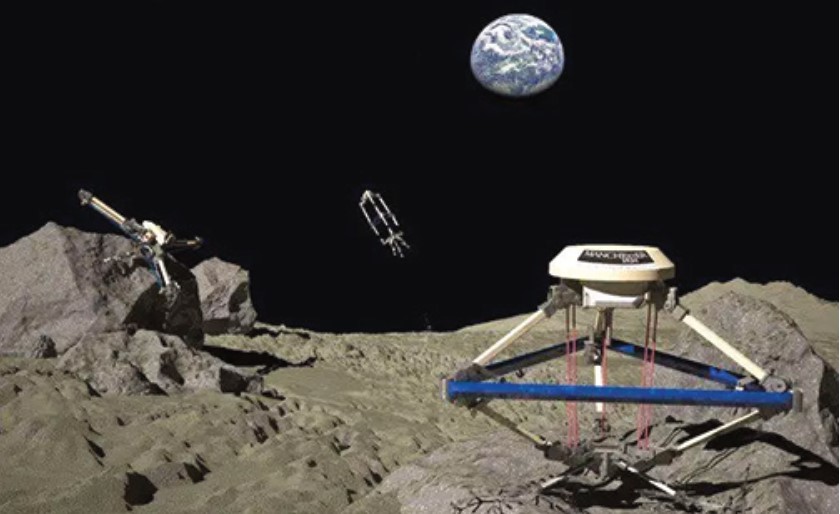
Olsen designed and built an automated winch system technology demonstrator for a lunar rover project that uses radiation-hardened, space-rated components, able operate in the harsh lunar conditions, withstanding extreme temperature variations and high levels of radiation. (Image: Olsen Actuators)
The satellite market itself has been undergoing a significant transformation. Satellites are getting smaller and the turnaround time in development and manufacturing has also significantly decreased. This is especially evident in the NewSpace sector, where innovation is rapid and operators are consistently bringing new technology to their satellites. The manufacturing process for these small satellites is very different to large, traditional GEO satellites which has always been a very risk averse part of the industry. Traditional manufacturers have long preferred to take the research and development of their components in-house as it gives them a high level of control.
The manufacturing process for small satellites is very different. Satellites are manufactured quickly, and operators are prepared to take more risks. Rather than take the proprietary approach as spacecraft manufacturers have done in the past, they are more willing to use COTS components to speed up the development process, ensuring that the spacecraft gets to orbit as soon as possible. Utilising space-proven COTS components with traceability means that they have trust in the systems and the parts are available within a certain timeframe, essential when they are running against the clock to launch.
The demand for lighter and highly reliable components is also increasing year on year. As space players try to lower costs without compromising on quality, they are looking to reduce weight so that launch costs can be lowered. It is important that they consider every component that is used, to make sure that it will make financial sense. In addition, it’s also essential that every component is highly reliable. Once launched into space, there are currently no means of servicing the spacecraft, rover or probe. Everything must work perfectly for the entire lifetime of the system.
Meeting Demands
Component providers are working hard to ensure that space-rated components are as sustainable as possible. Handing the responsibility for the design, development, manufacture and testing of components to a component company eliminates development costs for the operator and the manufacturer. It also means that experts in componentry are dedicated to R&D and are consistently enhancing the technology involved in these components to deliver a more efficient product which can help to contribute to the sustainability of a space program.
Utilising COTS Components
Taking a COTS approach eliminates the complexity and cost of development and testing in-house, with guaranteed performance and rapid lead times that speed up time to market. By leveraging the supply chain, as the defence sector has learned to do, commercial NewSpace companies are ensuring that they can maintain their chosen launch window, assuring that their mission will launch when they say it will. COTS manufacturers have already made the investment in R&D, integration, the clean room and project management. They have the engineering staff available. They offer quality in production and economies of scale, and many are already flight proven. Products undergo intensive testing for shock, vibration, cooling and radiation and other environmental testing. This may result in a more expensive cost per unit, but the development cycle is taken care of, and traceability can also be provided, if that is required for insurance purposes. As the industry moves towards more standardized and efficient production methods, COTS components are playing an increasingly important part.
Vigorous Validation Testing
Testing is critical to ensure the safety and reliability of any component that will be used in space. Many aspects of the components are put through their paces on specially designed test rigs that simulate the space environment. Using state-of-the-art measurement and control systems, the effects of extreme temperatures, vacuum environments, the stresses of launch and reentry are reproduced.
Move Away from Hydraulics
Moving parts on satellites had previously been powered using hydraulic technology which uses fluid for power. However, though they are effective, hydraulic systems are heavy, dirty, maintenance-intensive, and reliant on highly toxic fluids. If these hydraulics can be replaced with electromechanical systems, there are big weight savings to be made, which is key for the next generation of satellites.
Electromechanical components that are lighter, cleaner and utilize less power as they only do so when they are active. They are also highly accurate and can offer an increased range of actuation. They are more resistant to temperature variations, which is an ideal quality given the huge fluctuations in temperature in the space environment.
Creating a More Sustainable Lunar Rover
At Olsen, we were recently involved in a lunar rover project with the University of Manchester and UK Space Agency. The project aim was to deliver a proof-of-concept demonstrator for a winch system that would be used by the lunar rover to lower a probe into lava tubes on the Moon and then retrieve it after data has been collected. This was a challenging brief because the winch system had to be able to withstand temperatures ranging from extreme lows of -100 degrees Celsius, right up to highs of 280 degrees Celsius. It also must be protected from ingress of lunar dust (regolith), which is highly abrasive so will damage components causing them to malfunction. Exposure to Cosmic radiation and solar particles can cause electrical systems to fail, so the components of the winch must also be radiation-hardened to withstand this radiation exposure. There are also high vacuum conditions on the lunar surface and within the lunar tubes, which makes the design and operation of the lunar rover extremely challenging. The system must be extremely lightweight, yet strong enough to support the rover’s lowering into the lunar tubes, which could be 50m or greater descent. It’s also critical that the motor can read the velocity of travel so that it can lower the probe at a uniform velocity of 0.5m/s, for maximum control, to enable scientific measurements during descent and to reduce the likelihood of damaging any part of the rover system.
The Olsen team designed and built an automated winch system technology demonstrator that uses radiation-hardened, space-rated components, able operate in the harsh lunar conditions, withstanding extreme temperature variations and high levels of radiation. To prevent harmful regolith from accessing the system, the motor is contained within a sealed 3D printed drum design. Weighing just 15kg, the winch system is lightweight, yet still strong enough to ensure success of the mission. Electromechanical components were used for the project which meant that the winch system was lighter, highly reliable, rigorously tested and was delivered within months.
Every Component Counts
Across the space industry, sustainability is becoming more important and discussed widely as a topic that must be addressed. Getting to space is expensive, dangerous and requires a huge amount of power and resources, so it’s critical that the payload on any rocket is as lightweight as possible and that the life of the system that is launched is extended as long as possible. The component industry can play a valuable part in this sustainability effort. Through considered R&D efforts, the use of electromechanical systems rather than hydraulic ones, intense testing and validation and use of COTS products, space companies can lower their costs as well as make their mission more sustainable and environmentally friendly.
-------------------------
 Henry Hackford is Business Development Director of Olsen Actuators and Drives. He has over 20 years of professional experience in the aerospace industry and is a Chartered Engineer with a Mechanical Engineering degree. Early in his career, he worked on aircraft from companies such as Airbus, Boeing, Bombardier, and Cessna. In recent years, Henry transitioned to the commercial side of engineering, where he excels in ma