



Japan is often looked at as the early adopter of all things technology-related, be it the widespread use of laptops, mobile phones or gaming and value-added services. One would expect that the large LED screens found at busy intersections in Tokyo would naturally spill over to LCD and plasma screens at every possible media opportunity – be it a retail store aisle, cinema theatre or fast-food restaurant. However, a closer look at this otherwise tech-savvy country reveals that players have been slow in rolling out screens – not impeded by technology – but more by a reluctance to be first-to-market with a relatively unproven emerging advertising media.
Even though there are isolated LED and LCD screens almost everywhere in Tokyo, truly networked digital signs number no more than 600 sites for a single network. Standalone screens connected to DVD players are commonplace, and most run advertising content with local sponsors. Popular venues include outdoor LED signs, trains and subway stations and supermarket shelf-top displays. Branded networks in Japan are most are popular in hospitals where they deliver general and patient-specific information to visitors and staff. The industry is estimated at no more than 10,000 screens that are driven by Advertising at Point-of-Sale locations.
Given the poor response of the advertising industry over the last fiscal year, most big projects in Japan been put on hold, and trials have not translated into roll-outs. Like most other regions, network operators are optimistic that the growing acceptance of the medium will translate into more revenues, but Japanese digital signs are only between the $3-$5 CPM range on the whole. The market is therefore too small for aggregators of any kind to have a significant business case. There is also not enough media and just not enough players in the market currently to even consider consolidation.
As with most other emerging technology in Japan, there is no lack of interest, information or access to technology – the only true lag is in terms of actual numbers deployed. Players on the ground believe that most companies in Japan quickly rush in to a new application such as Digital Signage, analyze and form the ROI model for the application but are then reluctant to make the first moves.
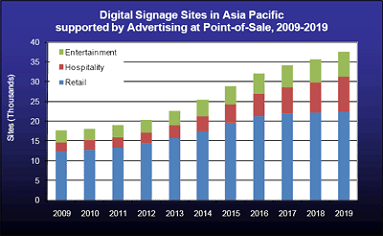 In a broader context, NSR expects the 17,500+ Digital Signage sites in the Asia-Pacific supported by Advertising at Point-of-Sale locations to grow to about 37,000+ sites by 2019. This represents well over 100,000 screens currently deployed growing to about 300,000 screens in this vertical by 2019. The larger networks found in countries such as China are more focussed on the Point-of-Transit and Point-of-Wait verticals, and sub-verticals such as Retail, Entertainment and Hospitality, while popular in the West, have been slow to develop in this part of the world. Japan has witnessed the influx of screens in retail locations in the shelf-top category, but these are yet to make a significant impact on site numbers as they tend to be found in the more up-market retail stores and display product information more than advertisements.
NSR believes, as do many, that the Japanese market may be two years behind its East Asian counterparts, but it has the potential to leap-frog ahead in a mere six months given the right trigger. Some big companies are rushing in to make heavy investments in the Japanese market, and there are plans for other East Asian players to grow presence in the country. It could be this year, or perhaps the next, but the Digital Signage sun is set to rise in this land, albeit a bit late this time around.