


by Adir Hadad, VP of Cloud Services-iKOMG
Pfaffikon, Switzerland, September 2, 2026--For decades, the value proposition of satellite broadcasting has been remarkably clear: reliable, efficient distribution at enormous scale. It can reach audiences across countries and continents regardless of the quality of local terrestrial or broadband infrastructure.
What is changing is how broadcasters define the value of that reach. Delivering a signal is no longer the end of the conversation. Broadcasters increasingly want to understand what happens afterwards: where audiences are watching, for how long, on which devices and where engagement is strongest.
Digital platforms have made this visibility commonplace. Satellite, by contrast, has traditionally provided enormous reach with far less information about how that translates into actual viewing. Closing that gap could be one of the most important developments for satellite broadcasting over the next decade.
The Data Gap Is Becoming a Business Issue
Distribution decisions are increasingly commercial decisions, and broadcasters and content owners are under pressure to demonstrate the value of every part of their strategy.
Knowing that a channel is available across a particular satellite footprint remains important, but availability alone cannot provide the complete picture. Audience data can influence programming, advertising, localisation, market expansion and investment.
If a broadcaster sees particularly strong engagement in one territory, that may justify additional commercial activity. If viewing patterns reveal an audience developing somewhere unexpected, that can influence the next distribution decision. Data turns assumptions about markets into evidence.
This is also why the satellite-versus-streaming debate feels increasingly outdated. Broadcasters already operate across multiple distribution environments. The more relevant question is how satellite can gain some of the visibility associated with digital media without losing the scale and reliability that make it valuable.
Giving Satellite Greater Visibility
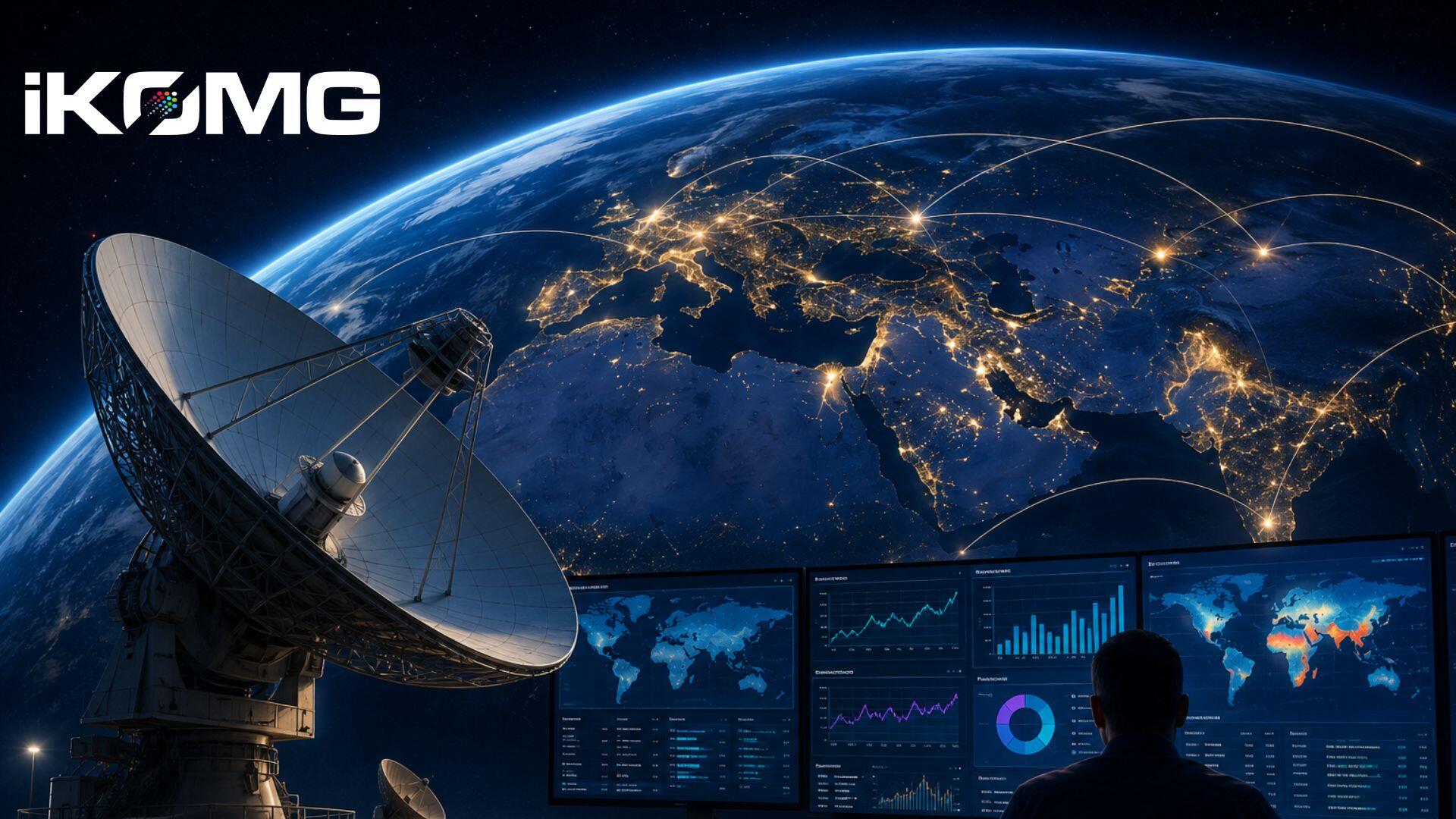 This challenge has been central to the development of iKOANALYTICS at iKO Media Group. Broadcasters invest significantly in distributing channels via satellite, yet understanding actual consumption once those channels reach viewers has historically been much harder than within OTT environments.
iKOANALYTICS brings satellite monitoring and distribution information together with audience analytics. For supported connected television environments, broadcasters can access data including minutes watched, total accesses, device information and geographic insights alongside information about their satellite services.
The important part is not simply having more metrics, but being able to use them. Operational teams can understand the health and performance of a service, while audience data can inform programming, distribution and commercial strategy. Rather than simply confirming that content has been delivered, data can help broadcasters understand what that delivery is achieving.
From Monitoring to Commercial Value
Satellite broadcasting has always generated data. Signals are monitored, performance is analyzed and faults are identified because reliability is fundamental to professional broadcasting. Most of that information, however, tells us about the technical health of a service rather than the value being created once content reaches an audience.
Bringing those perspectives together creates a much more useful picture. A broadcaster may know that its signal is performing correctly across several territories. Audience data can add another dimension by showing where engagement is strongest and how consumption varies geographically.
That information has value far beyond engineering. It can support decisions around scheduling, content acquisition and localization, while helping broadcasters assess whether a market warrants further investment.
It also matters for monetization. Advertisers have become accustomed to the accountability of digital media. Satellite does not need to replicate every characteristic of digital advertising, but stronger audience visibility gives broadcasters better evidence of the audiences they reach and a stronger foundation for demonstrating commercial value.
Satellite Does Not Need to Become OTT
There is a temptation whenever data enters the conversation to measure traditional broadcasting against streaming. That misses one of satellite's greatest strengths.
One signal can reach enormous geographic areas efficiently and consistently without requiring an individual broadband stream for every viewer. In many markets, that combination of scale, accessibility and reliability remains extremely difficult to replicate.
The opportunity is not to turn satellite into OTT, but to address some of its historical limitations. Data is an important part of that evolution, alongside the growing connection between satellite, cloud, IP, FAST and OTT.
It is also why iKOANALYTICS has been integrated within iKOSYSTEM. Satellite monitoring, distribution information and audience analytics can sit alongside the wider services broadcasters already manage, extending visibility beyond channel delivery towards understanding what happens after a channel reaches viewers.
Making Reach More Valuable
There are limitations. Not every television environment is connected, measurement capabilities will vary between markets, and satellite will not suddenly produce exactly the same datasets as a purely digital platform. Nor does it need to.
The objective is greater visibility and the ability to turn that visibility into better decisions. Satellite has spent decades becoming more efficient, reliable and scalable. Data now adds another dimension to that value.
For broadcasters, this means moving beyond measuring distribution simply by footprint, capacity or technical performance. Reach becomes considerably more powerful when there is evidence behind it: where audiences are engaging, how they are consuming content and where new commercial opportunities may exist.
At iKOMG, the development of iKOANALYTICS reflects that direction, but the shift is much broader than one platform or company. It represents a change in what broadcasters should expect from satellite distribution itself. The question can no longer end with whether a channel successfully reached its destination; broadcasters should increasingly understand what happened when it got there and use that knowledge to decide what happens next.
Satellite has already proved the power of its reach. The next chapter is about proving the value behind it—and data is what can make that possible.
---------------------------------

Adir Hadad is the VP of Cloud Services at iKO Media Group (iKOMG). For more information on iKOMG's iKOANALYTICS and other services for the broadcast industry, go to: www.ikomg.com