



Global Markets - Latest Developments
As technology moves on, so do the demands on our media infrastructure. In the world of satellite that is as true as everywhere. Satellites are being used for a whole plethora of activity, from broadcasting to powering navigation across the globe. This increased demand has a negative effect however on the feed to the satellite in the form of radio frequency interference, meaning, for broadcasters in particular, a less than perfect television viewing experience.
Carrier ID
It’s a serious problem bedevilling the industry far too long now. Last year, in Asia alone, the estimated revenue losses were pegged at almost US$2 billion. Operators warn that the plague, if left unchecked, could destroy the whole industry-not just in Asia but the entire global Pay-TV market. So how Asia is grappling with this persistent problem could be instructive for the rest of the world as new markets are opening up in places such as the Middle East, Africa and Latin America.
Britons who already own a high definition television set (HDTV) are more than twice as likely to buy a 3D television within the next twelve months as those who have not yet bought an HDTV, according to a survey of 700 UK consumers just completed by analyst firm Strategy Analytics. These findings challenge the commonly held assumption that people who have already bought an HDTV are not likely to upgrade to a new 3DTV set any time soon.
A new analysis by SNL Kagan reveals that the U.S. multichannel market delivered its worst performance on record in the second quarter, losing 216,000 customers compared to a 378,000 gain in the same period last year.
The World Teleport Association (WTA) just published its 2010 update of Sizing the Teleport Market, which provides the only market data on the teleport sector, from number of facilities to revenues, workforce and purchasing power. WTA's Executive Director Robert Bell deconstructs the study and its implications for the industry.
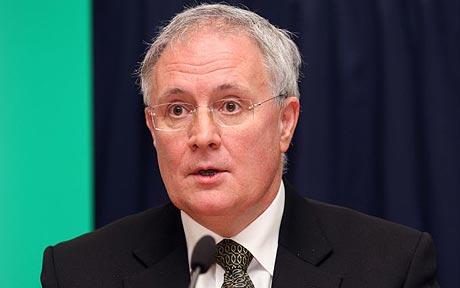 The opening plenary session of the IBC2010 conference will feature an address by Sir Michael Lyons, the chairman of the BBC Trust, on the future of public service broadcasting.
 The CASBAA Convention 2010 to be held at the Grand Hyatt Hotel in Hong Kong on October 25th – 28th will be focusing on digital content delivery. This year’s theme is “Unlock Your Networks” and it aims to connect the dots between Platforms, Channels, Technologies and Partnerships.
NSR’s annual review of the wireless backhaul via satellite market shows the industry made tremendous gains from the blistering pace of wireless subscriber growth in 2009 and the first half of 2010. Despite a challenging economic environment, the wireless industry was one of the global economic bright spots, which led to sustained demand for satellite backhaul services for use primarily in rural markets.
Despite a limited market slowdown, the fixed satellite market reached a new high in revenues last year, according to Euroconsult’s soon-to-be-released report “Satellite Communications & Broadcasting Markets Survey, Forecasts to 2019.” The fixed satellite sector grew both in terms of transponder demand (+5.3%) and revenue reaching $10.3 billion revenue in 2009. The company maintains a positive outlook for the future of the industry.
The GVF's global VSAT Certification Program, which was cited recently in the SSPI's Industry Innovator awards ceremony, is making vital inroads in the maritime satellite space.
In a previous column I noted the GVF VSAT installation training curriculum because it includes a focus on the deployment of systems used in the maritime environment, and would be included in one of the program sessions of the forthcoming GVF Broadband Maritime Europe conference in London on 28th and 29th June (www.uk-emp.co.uk/BMEu.Ldn.2010/).