



Global Markets - Latest Developments
The global pay TV market, including telco IPTV, cable and satellite video services, totaled $125 billion in the first half of 2011 and is forecast by Infonetics Research to grow to $353 billion by 2015. according toits Pay TV Services and Subscribers report, which forecasts and analyzes the telco Internet protocol television (IPTV), cable video, and satellite video services markets.
NSR's Global Assessment of Satellite Supply & Demand, 8th Edition study, released today, indicates that satellite operators continue to buck the global economic malaise. In 2010 global satellite operators saw a strong revenue increase of over US$550 million, derived from the lease of commercial satellite capacity. NSR projects that by 2020 capacity leasing revenues will reach US$17.2 billion, up from US$10.1 billion in 2010.
CommunicAsia2012, the premier launch pad for the infocomm (ICT) industry and the largest of its kind in the Asia-Pacific region, will be offering increased networking opportunities to attendees with many exhibitors already looking forward to be a part of this iconic event. The event, returning to the prestigious Marina Bay Sands in 2012 for its 23rd edition from 19 to 22 June, will occupy five levels of exhibition space including hospitality suite options.
CASBAA’s Q4 update on trends in multichannel TV distribution, audience data and viewership shows a 12% industry growth in the past 12 months in terms of connected homes and an increase in dual subscription homes as channel choices increase.
Broadband analyst firm Point Topic, predicts there will be over 10.5 million superfast broadband lines in Britain within the next five years. With another 4.6 million cable broadband connections this means that almost 60% of broadband customers – and more than half of all homes and businesses – will be using superfast speeds of 30 megabits or more by the end of 2016.
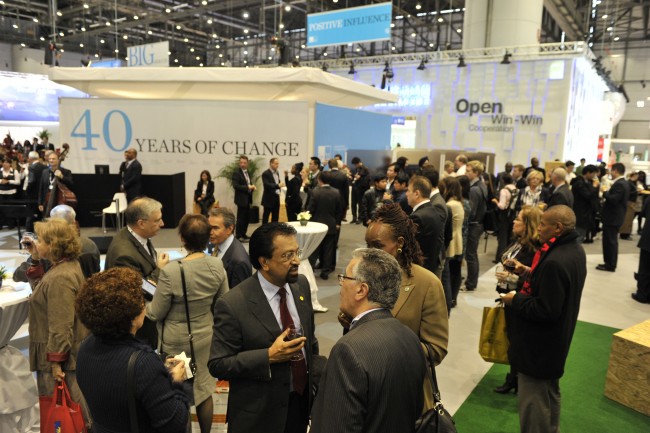 Telecom World took place in Geneva, Switzerland from 24 to 27 October 2011, an event that focused on the latest technologies, services, regulatory issues and trends in the telecommunications sector. It was also the 40thanniversary of the ITU Telecom event that started in Geneva in 1971. This year’s event was the 12thedition, having been previously held every four years. Over 300 VIPs, head of states and governments, ministers, CEOs of global corporations attended the event this year to celebrate this important milestone.
After receiving a hit with very few contracts from the U.S. Government’s National GeoSpatial Intelligence Agency (NGA), Europe’s largest EO data provider, EADS Astrium, seems to have set sail east to Asia where demand for EO satellites and imagery is growing across the board.
Point Topic’s Oliver Johnson to review broadband mapping, the challenges involved and the solutions at ITU Telecom World 2011
Broadband continues to spread throughout the world’s population, getting faster and benefitting millions, but according to leading analyst firm Point Topic this has also increased the need for accessible and transparent mapping. It is such mapping of take-up, coverage and speeds that highlights to governments and regulators the evident disparities of broadband availability and where investment funds are best spent.
The Indian telecommunications industry is one of the fastest growing in the world. The industry has witnessed consistent growth during the last year on the back of rollout of newer circles by operators, successful auction of the third-generation (3G) and broadband wireless access (BWA) spectrum, network rollout in semi-rural areas, and increased focus on the value added services (VAS) market. Market entry strategy for Wireline telecommunication companies by eprobe Research Pvt Ltd explores the consequences and opportunities arising from this situation.
The CASBAA Convention 2011 has the industry covered through a compelling range of sessions featuring internationally renowned guest speakers. Themed TV365: Watch Closely!, the show will be staged in Hong Kong, October 31st - November 3rd at the Grand Hyatt. “As a key event in the industry calendar, delegates expect the best speakers covering items relevant to their businesses,” said Simon Twiston Davies, CEO, CASBAA.