



EMEA Markets - Latest Developments
It is a bad time to sell satellite ground segment, aka a teleport. But it is a great time to sell a successful satellite services business with a teleport at its core. That paradox is the conclusion of Best Practices in Teleport Valuation, a newly published report from the World Teleport Association.
Spain’s satellite communications operator, Hispasat, said it has completed deploying 4,000 antennas capable of delivering broadband service making it the market leader in satellite residential broadband market in Spain.
Broadcast management software provider SintecMedia today announced the acquisition of Argo Systems, a provider of business solutions to the cable network and operators industry. This is SintecMedia's second acquisition in the North American market, complementing its recent purchase of StorerTV.
SpeedCast Ltd, has completed, with the support of its majority shareholder, TA Associates, a buyout of maritime services provider Elektrikom Satellite Services, based in the Netherlands.
Nevion and T-VIPS, pioneers of media transport for broadcasters, service providers and government entities worldwide, announced Wednesday the completion of their merger following regulatory approvals.
The new company, named Nevion, said it is committed to preparing customers for the next generation of media transport from acquisition to the home. The merger is structured as a cash and shares transaction. No further financial details of the deal were revealed.
Global Navigation Satellite System (GNSS), which started purely as a military application, has now widened to include all possible users - government agencies, industries, and even individuals. Frost & Sullivan analysis forecasts increasing prominence of Position, Navigation and Timing (PNT) data derived from Global Navigation Satellite System (GNSS) and associated Value Added Services (VAS) in the next 10 to 20 years.
Anybody who lives outside an urban area in Europe is familiar with the problem of slow loading internet pages. Due to the steady rise of data streams on modern internet pages it can take ages to load an internet page these days, often forcing the browser to time out. While internet access is widely regarded as a right and no longer a privilege – and social, economic and even political development is increasingly dependent on broadband connectivity – millions of people across Europe suffer from insufficient or even non-existent internet connectivity.
Following the conclusion of the widely applauded GVF Ka Roundtable Assembly 2012: Satellite Service Provision Game-Changer in Action event, which took place in London on 5th & 6th December 2012 with approximately 100 delegates attending, the satellite industry has now called for a further platform to facilitate extended industry and end-user dialog about high-capacity and high-throughput satellite systems, new ground infrastructures, and advanced networking applications.
Amino Communications Chief Technologist Kevin Lingley has looked into his crystal ball to reveal his thoughts about the five most significant developments in the pay-TV market for 2013.
In his latest blog - www.aminocom.com/blog/ -, Kevin predicts:
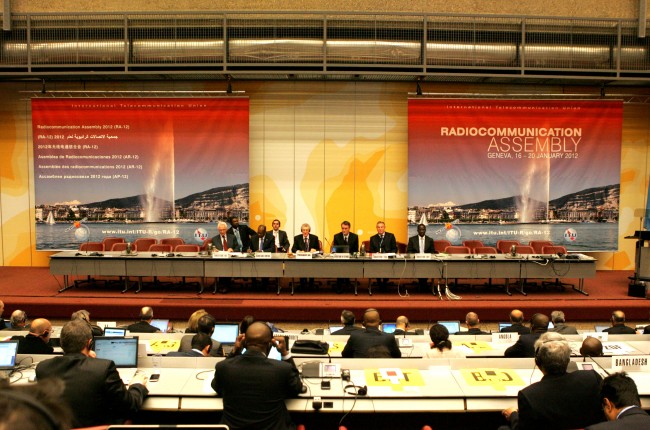 The World Radiocommunication Conference opened in Geneva today to review and revise the Radio Regulations, the international treaty governing the use of radio-frequency spectrum and satellite orbits. The work of this international treaty-making Conference will be conducted over four weeks until 17 February to address the changes required to the regulation of orbit/spectrum resources in the interest of the users of these scarce resources, with global implications for policy-makers, regulators, the industry as well as end-users.