



Asia-Pacific Markets - Latest Developments
Euroconsult has released its annual “Space Economy report” report for 2021. In its latest edition, Euroconsult estimates that the global space economy totaled US$ 370 Billion in 2021. This number consists of:
• The space market (US$337 Billion in 2021) which includes commercial space revenues and government procurement for their space activities contracted to the private sector.

The January-February 2022 issue of the Satellite Executive Briefing magazine is now available. Featuring:
Industry Trends to Watch in 2022 by Virgil Labrador
Risks and Benefits of Venture Capital for Space Firms by Rotoiti Consulting
Show Report: World Satellite Business Week by Elisabeth Tweedie
Regulatory Imperatives in the Disaster Response Ecosystem by Martin Jarrold
Satellites and Climate: "Embalm, Cremate, Bury at Sea..." by Lou Zacharilla
PLUS Mergers and Acquisitions, Executive Moves, Market Briefs, Vital Statistics, Satellite Markets Stock Index and many more. Click here to read or download the file.
A man receives a telegram reporting the death of his mother-in-law and asks for instructions. He immediately replies back: “Embalm, cremate, bury at sea. Take no chances!” One defining feature of the space and satellite industry is that it knows how to take risks but does not take chances.

The December 2021 Year in Review issue of the Satellite Executive Briefing magazine sponsored by Gazprom Space Systems is now available. Featuring:
The Most Significant Storylines in 2021 by Virgil Labrador
Taiwan: A Serious and Up-and-Coming Player in the Space Industry by Aurélie Gillet
Executive Spotlight: Igor Kot, Deputy Secretary-General, Gazprom Space Systems
Company Spotlight: ND SATCOM: Flexibility, Agility and Resilience
A Year to Remember and A Year Ahead by Martin Jarrold
In Skynet We Trust by Robert Bell
PLUS Products Spotlight, Mergers and Acquisitions, Executive Moves, Market Briefs, Vital Statistics, Satellite Markets Stock Index and many more. Click here to read or download the file.
Hughes Communications India Pvt Ltd, (HCIPL), a majority-owned subsidiary of Hughes Network Systems, LLC and Bharti Airtel Limited, India’s premier communications solution provider, today announced the formation of a joint venture to provide satellite broadband services in India.
NextGen Acquisition Corp. II (NASDAQ: NGCA) ) stockholders today approved the previously-announced business combination with Vieco USA, Inc., the parent company of Virgin Orbit, at a special meeting of stockholders held today. A Form 8-K disclosing the full voting results is expected to be filed with the Securities and Exchange Commission.
Unlike the IBC, which was canceled at the last minute, World Satellite Business Week organized by Euroconsult, went ahead in December 2021 in Paris as planned. Normally an in-person only event, held in September, the December event was both in-person and online, resulting in close to normal attendance. Euroconsult took extraordinary precautions, including making on-site Covid-19 testing available.
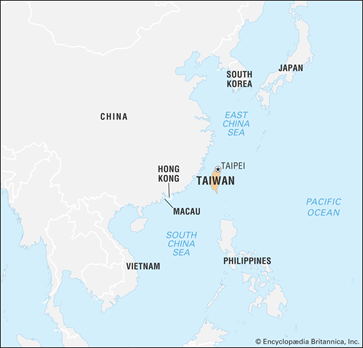 Taiwan, a small island in the Pacific Ocean with a population of 23.5 million, is not the first place that comes to mind when thinking of space powers. With a historically limited domestic space sector, Taiwan’s space ambitions have been limited to a few technologically impressive, but still niche missions, with this despite an economy that has developed several world-leading high-tech sectors, and a world-leading supply chain for certain critical components.
We're finally near the end of 2021 and for most people, it couldn't come fast enough. It's been a very challenging year not only for the satellite industry but for pretty much the global economy.
As I've pointed out in several previous articles in this publication (The Satellite Industry in a Post-Pandemic World," September 2021 and The Satellite Industry in the Time of Covid-19, April 2020), some sectors may not have been impacted by the pandemic as others, but impacted nonetheless.
Pandemics are Here to Stay
ST Engineering today announced that its Corporate Venture Capital unit, ST Engineering Ventures Pte Ltd led a US$ 30 million Series A round in Israel-based hiSky Ltd., a developer and provider of affordable and agile satellite Internet of Things (IoT) networks and solutions, with participation from SDF (Strategic Development Fund), the investment arm of Tawazun Holding, and hiSky’s existing shareholders.