



Asia-Pacific Markets - Latest Developments
The satellite broadband sector has gained a lot of ground as there are now approximately over one million individual users worldwide. These are families and small businesses who subscribe to service providers that address the individual consumer by providing a dish, modem and access to the Internet. With the familiar asymmetrical arrangement, these services deliver download speeds between 200 kbps and perhaps 1 Mbps; and upload speeds that hover at 100 kbps as a peak rate.
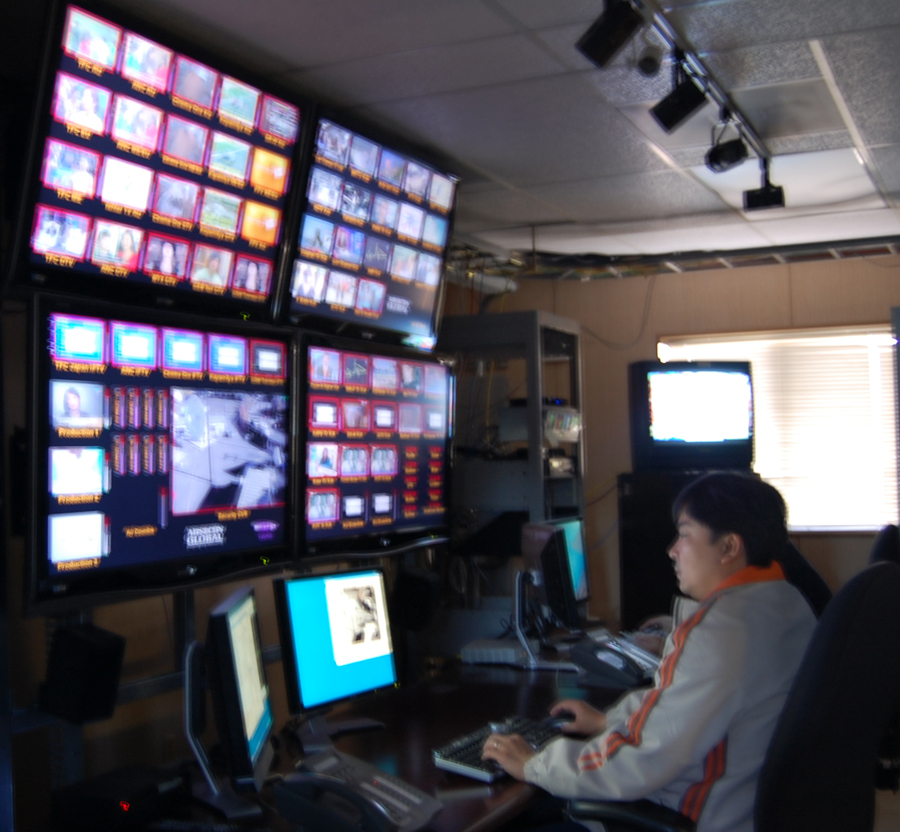 Many industry observers are quick to note that the teleport business which has been undergoing considerable consolidation in the last few years is not as viable a business as it used to be. One relatively new entrant to the teleport business is trying to disprove the doubters.
Over 1,000 attendees officially registered for the Pacific Telecommunications Council (PTC) conference held in Hawaii from January 17-21, 2009 with 4,000 more participating in the event as "networkers." This number was lower than in previous years, but the quality of the attendees in terms of having top executives of leading companies more than made up for the quantity of delegates. Besides, the PTC is slightly different from other shows in that it has five times as many other participants who can register as a "networker" and still participate in the many activities surruonding the event.
If you think you’ve explored every possible market for satellite services and products, think again. One of the industry’s best kept secrets is a major trade show that attracts almost three times the number of attendees as the annual Satellite show in Washington, D.C. The Broadcast, Cable and Satellite Eurasia Expo and Conference held annually in Novermber in Istanbul, Turkey attracted 14,000 attendees in 2007 and 511 exhibiting companies from 44 countries.
The satellite industry will be facing serious challenges in raising new capital and credit due to the downturn in the world financial markets. This was the gist of a whole-day ISCe Satellite Investment Symposium (ISIS-NYC) held at the 3 West Club in midtown Manhattan, New York last October 13, 2008.
The Cable & Satellite Broadcasting Association of Asia (CASBAA) at its annual convention in Hong Kong in October released a new report highlighting the threat to television services posed by the deployment of Broadband Wireless Access services (such as WiMax) in the radio frequency band used for the wholesale distribution of satellite television signals in Asia.
With many industries around the world in the doldrums due to the current economic crisis, NSR's latest multi-client market research report released December 3rd, 2008 entitled the Global Assessment of Satellite Demand, 5th Edition, projects that the commercial satellite transponder leasing market should emerge relatively unscathed.
One of the industry’s little secrets is actually a major trade show that attracts almost three times the number of attendees as the annual Satellite show in Washington, D.C. The Broadcast, Cable and Satellite Eurasia Expo and Conference held annually in November in Istanbul, Turkey attracted over 14,000 attendees in 2007 and 511 exhibiting companies from 44 countries. The exhibition and conference’s main draw is the emerging market of over 500 million people in the Eurasian region where Turkey is a major center.
With the global financial downturn, satellite companies are always looking for new and emerging markets to sell their products and services. But with the increasingly global nature of the world’s economies, there are fewer markets left to explore.
A new generation of satellites, and spectrum assigned to mobile satellite services, will play a prominent role in the next major development in television and radio broadcasting.
· Satellites will enable relatively rapid roll-outs across major regions of the world and spectrum assigned to mobile satellite services holds the key to unlocking this potentially massive market.
· A combination of satellite and terrestrial transmission will deliver the next generation of television, radio and associated multimedia services to mobile and in-vehicle receivers.