



Asia-Pacific Markets - Latest Developments
Broadband-IP&TV Asia 2012 has been hailed a success, with well over 1,000 visitors attending the event in Kuala Lumpur, Malaysia this week. With a focus on delivering growth in an evolving ecosystem and enhancing the customer experience for the connected consumer, Broadband-IP&TV Asia affirmed its position as one of the most comprehensive events ever delivered in the region.
Singapore has continued to grow both its mobile subscriber base (152% penetration by December 2011) as well as its value-added data services. The launch of 3G services has been particularly insightful. There was an obvious period of uncertainty surrounding the introduction of 3G. After launch in 2005 the take up rate was initially slow. Subsequently, however, there has been a strong upsurge in demand. No doubt this has been helped by the wider availability of more affordable, high feature handsets.
For the first time, the CommunicAsia2012 Summit will see two visionary speakers and over 180 distinguished international speakers at the region’s largest gathering of ICT professionals and industry experts. Ms. Aliza Knox, Managing Director of Commerce for Google Asia Pacific and Ambassador David A. Gross, Partner at Wiley Rein LLP, will deliver Visionary Addresses on Wednesday, 20 June at Marina Bay Sands.
Optimism is high in Asia. With increased digital deployments, multichannel-TV will create more demand for satellite services across the region. But do the needs of Asian broadcasters differ from the rest of the world? Where are the opportunities? Are there potential roadblocks? Leading satellite industry experts will answer these questions and discuss industry issues at the CASBAA Satellite Industry Forum 2012 to be held on June 18 on the eve of CommunicAsia in Singapore.
During Satellite 2012, the Society of Satellite Professionals International (SSPI) bestowed the Industry Innovators Awards on Eutelsat Communications and ViaSat Inc in recognition of the development and launch of their High Throughput Satellites (HTS), KA-SAT and ViaSat-1, respectively. High frequency reuse and multiple spot beam architecture have packed 10 times capacity on these Ka-Band satellites without any deployment cost penalties.
Bright lights. Big crowds. Penn & Teller, Circe de Soleil and showgirls wearing costumes that would make their grandfathers blanch. If it’s April, it must be NAB in Las Vegas.
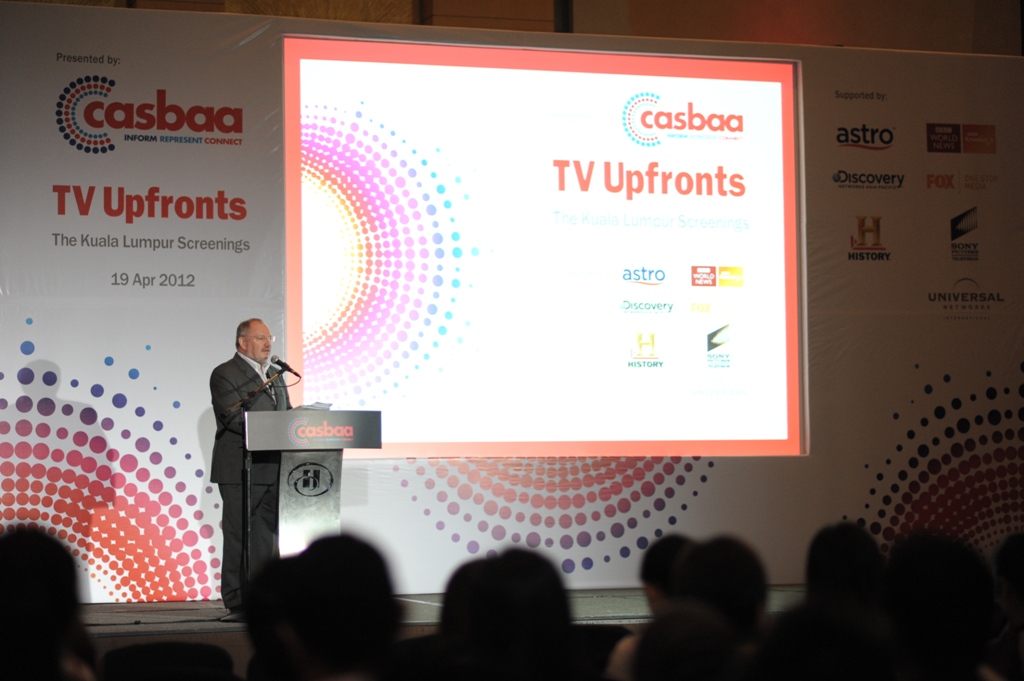 The power of multichannel TV continues to resonate throughout the Asia Pacific. Attracting over 130 representatives from advertising agencies, clients and networks, CASBAA’s TV Upfronts – The Kuala Lumpur Screenings on April 19th was the most recent stopover for the CASBAA Advertising roadshow.
The need for Military Satellite Communications is increasing in the Asia-Pacific region and GVF and its Membership are elevating the industry's profile through workshops, speaking positions and sponsorship opportuities at events such as SMi's 2nd instalment of MilSatCom Asia, to be held the 9th and 10th of May in Singapore.
The reports’ findings reveal unique comparative industry statistics since 2002, showing consistent and strong growth in the Information and Communication Technology (ICT) sector, heralding a positive future for this industry in Afghanistan. It also shows exciting developments in the convergence of technology platforms and media, in step with the wave of new media applications and social media content washing across the globe.
Among the highlights of the study include:
India continues to be one of the fastest growing major telecom markets in the world. It is also one of the largest. Sweeping reforms introduced by successive Indian governments over the last decade have dramatically changed the nature of telecommunications in the country, according to a new Research and Markets report entitled "India - Telecoms, Mobile, Broadband and Forecasts."